LA River Path Project Faces Community Backlash As LA Metro Drafts Proposals
Lack of eastside access points leaves Boyle Heights excluded, adding to historic disenfranchisement by city planners.

As LA Metro moves to finalize designs to complete the LA River Path Project, issues surrounding unequal access and high costs prompt community debate.
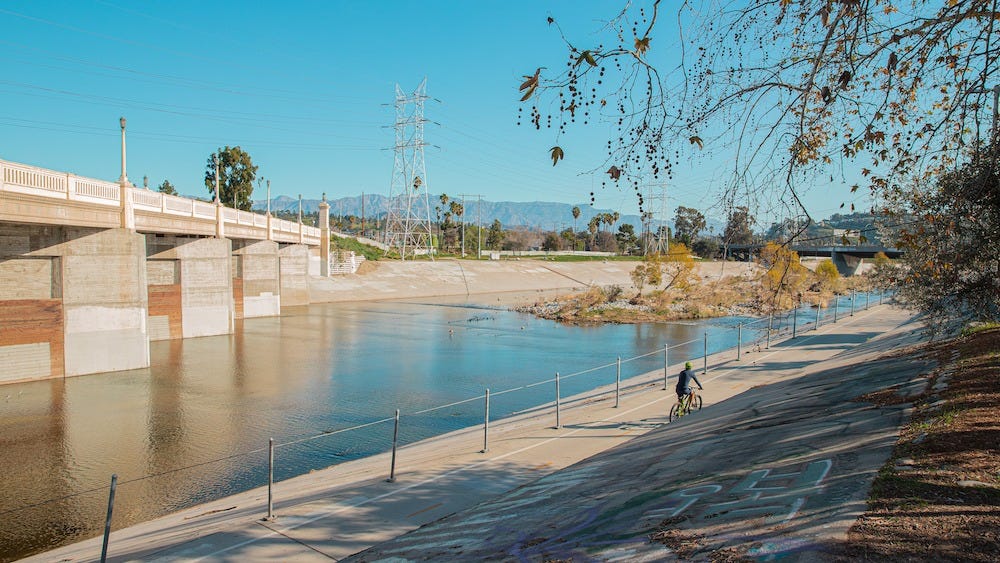
The proposed project aims to complete the LA River’s bicycle and pedestrian path, closing the eight-mile-gap between Elysian Valley and the City of Vernon.
On Wednesday evening, Jan. 21, a public comment hearing was held in Lincoln Heights, where planning officials with LA Metro presented eight designs for the path’s extension. During the meeting, many residents expressed dismay at the project’s lack of access points for neighborhoods on the east bank of the river given the exorbitant costs.
Initially proposed in 2019 with a budget of $395 million, the current proposals for the project are estimated at costing upwards of $1 billion.
Under the California Environmental Quality Act (CEQA) the project’s draft still must pass its Environmental Impact Review (EIR) in order to start construction. According to Mitali Gupta, Senior Manager of the LA Metro’s River Path project, public comment periods are a vital step in the EIR process.
“Our job is to listen to community concerns,” Gupta said. “The current project alternatives exist because of public comment periods.”
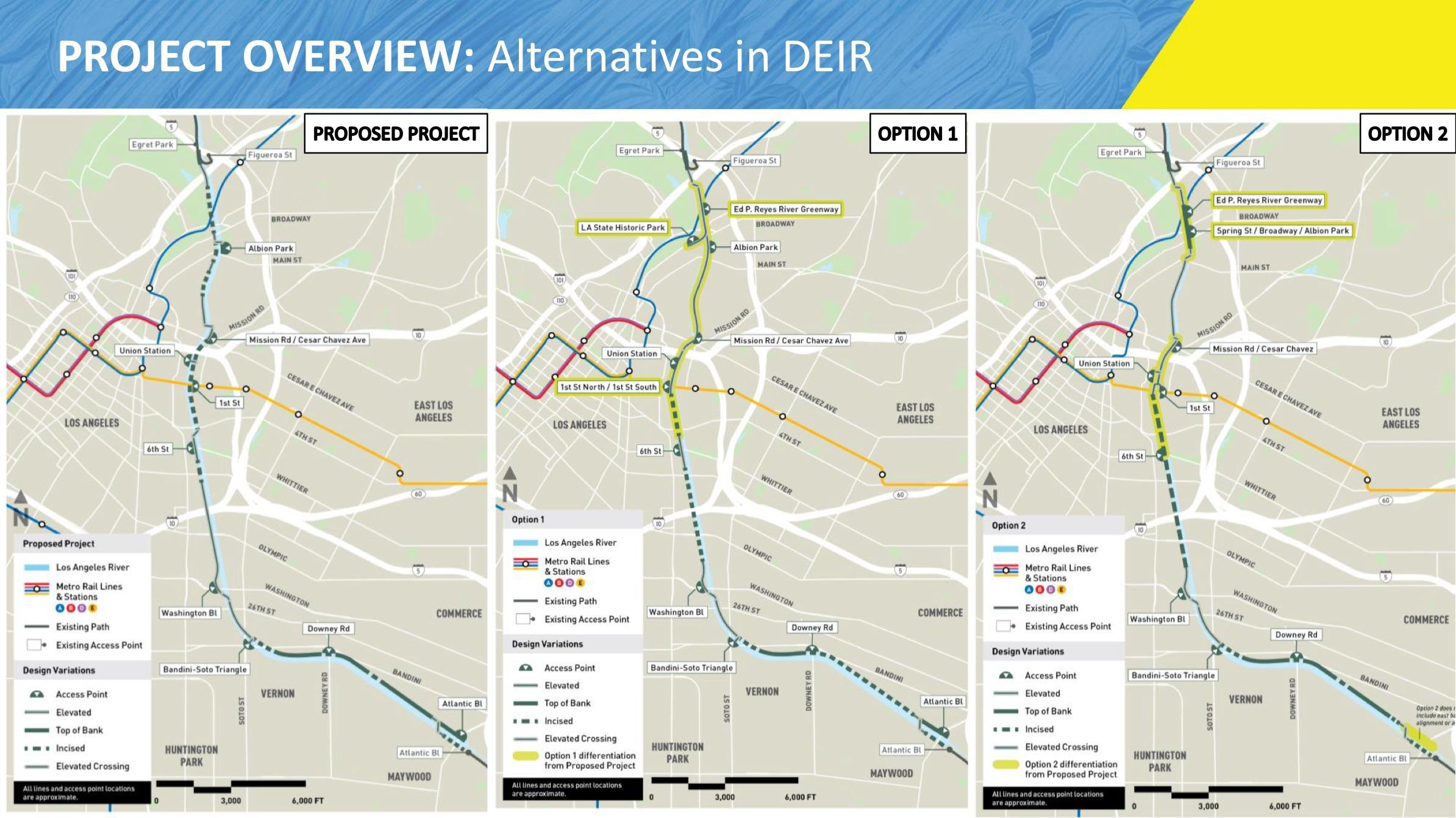
The eight proposed designs, referred to as Locally Preferred Alternatives (LPA), have been shaped by LA residents with input taken from previous public comment hearings.
Without taking considerations from the public comment hearings into account for the final LPA drafts, LA Metro will legally not be able to pass its EIR or start construction on the pathway.
As stated by LA Metro, the project’s main goal is to create a vital pathway to employment centers, regional destinations, and existing public transit connections, and schools throughout downtown LA. Upon completion the project would create 32 miles of uninterrupted pathway from the San Fernando valley to Long Beach.
As it stands currently, all eight LPAs keep the pathway exclusively on the west bank, with minimal eastern access points and pedestrian bridges to connect neighborhoods like Boyle Heights.
The current proposals for the river path have several east-west crossings in place, but on the proposed pathway parallel to Boyle Heights between 1st Street and Downey Road, there are zero eastern access points.
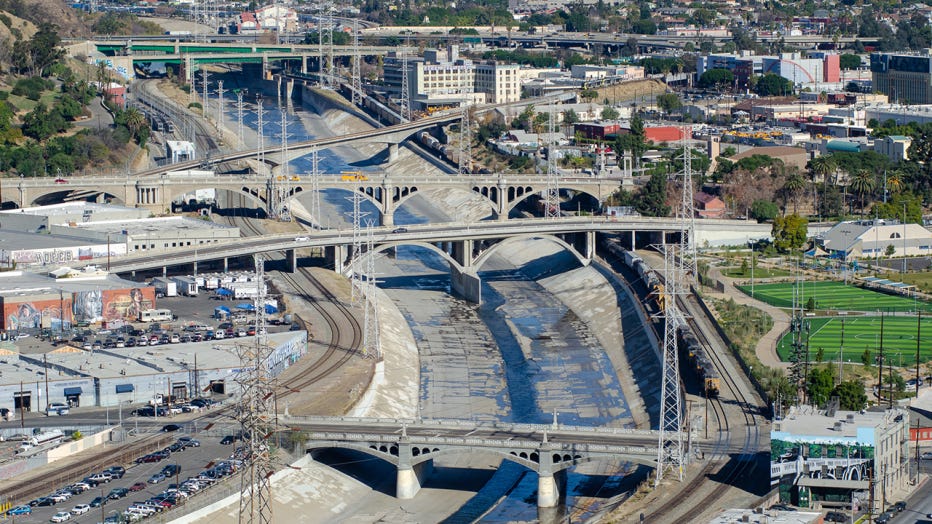
The eight mile segment where the path will be built is one of the most spatially constrained, passing under a total of thirty bridges and running parallel to active rail lines that push right up against the riverbanks on either side.
Given the inflated costs, access concerns, and the tight space the path must squeeze into, LA Metro is expecting that the completion date may go on until 2031.
Carrie Sutkin, an urban planner and community activist who worked to create the Elysian Valley segment of the river path, brought up that the existing segments still have infrastructure in place to ensure there is access to the east side.
“The East bank must be open,” Sutkin said. “LA taxpayers paid $400 million to make this happen, and the fact that no officials from the City of LA are present at this meeting to hear this is truly disappointing.”
Bryant Morales, one of the first people to comment, voiced his opinion to the LA Metro planning team.
“Boyle Heights has always been a historically underserved district,” said Morales, a Boyle Heights resident. “The construction of the freeway system during the 50s cut off and polluted prosperous businesses and neighborhoods, and to this day there still isn’t adequate pedestrian infrastructure.”
Morales urged the project’s managers to provide at least one eastern access point to the path, by means of an east/west pedestrian bridge where the path meets Olympic boulevard. Explaining Boyle Heights’ long history of displacement, Morales conveyed that increasing access to neighborhoods in east LA would revitalize safe pathways into the city that previous planning initiatives took away. By completely cutting off access to Boyle Heights, LA Metro’s River Path Project will only perpetuate the long line of spatial inequalities that have been affecting the neighborhood since the 1930s.